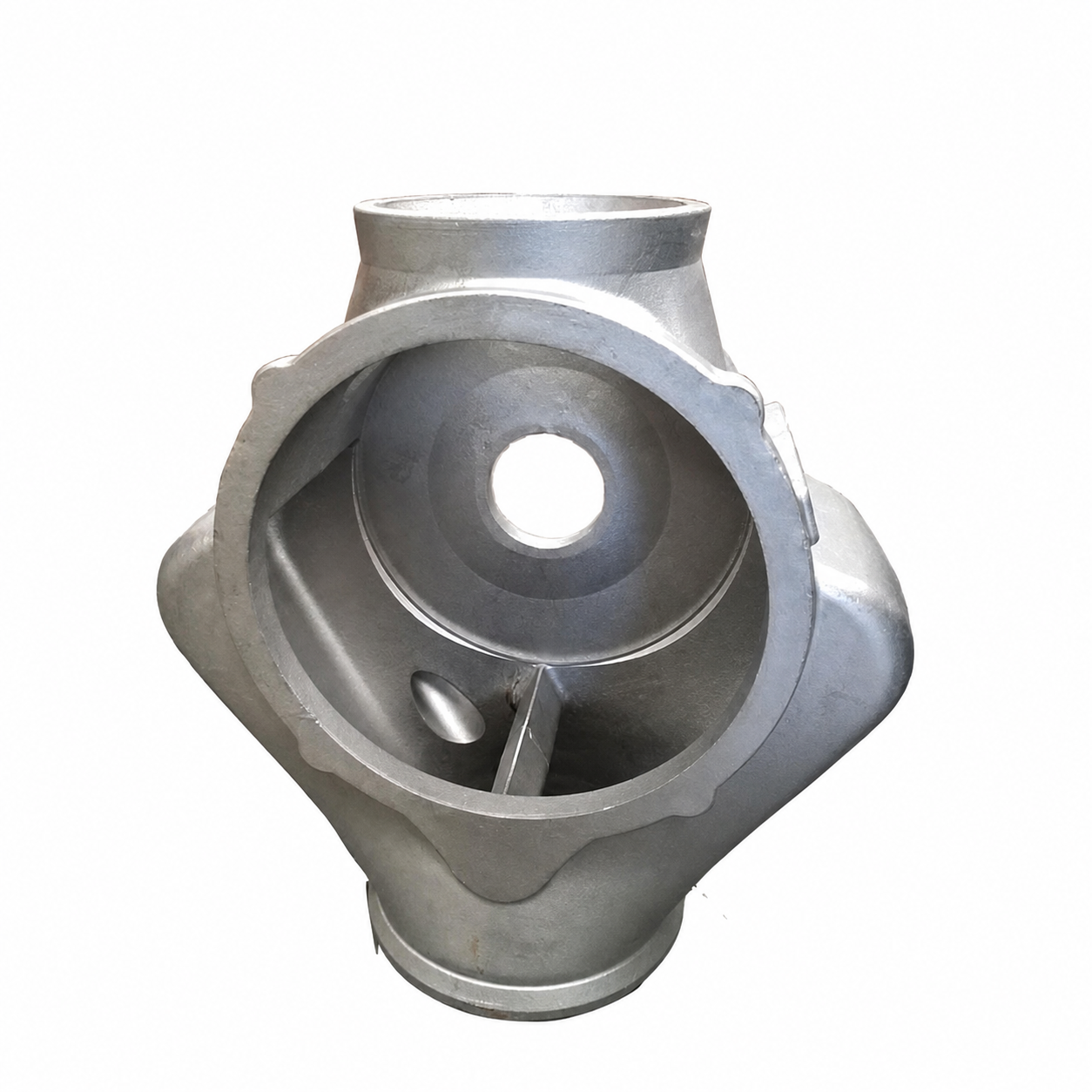
By Ms.Coco Ho
Specify the hot-side duty before choosing the casting alloy.
Stainless steel casting for turbine housing is a drawing-controlled component project, not a material choice that can be settled by the word “stainless.” The housing geometry, hot gas environment, start-stop cycle and adjoining components all affect what must be specified. For a useful Honyang Metal enquiry, identify the exact housing function first, then separate the material requirements from the dimensions established by casting and machining.
Confirm which housing the drawing describes
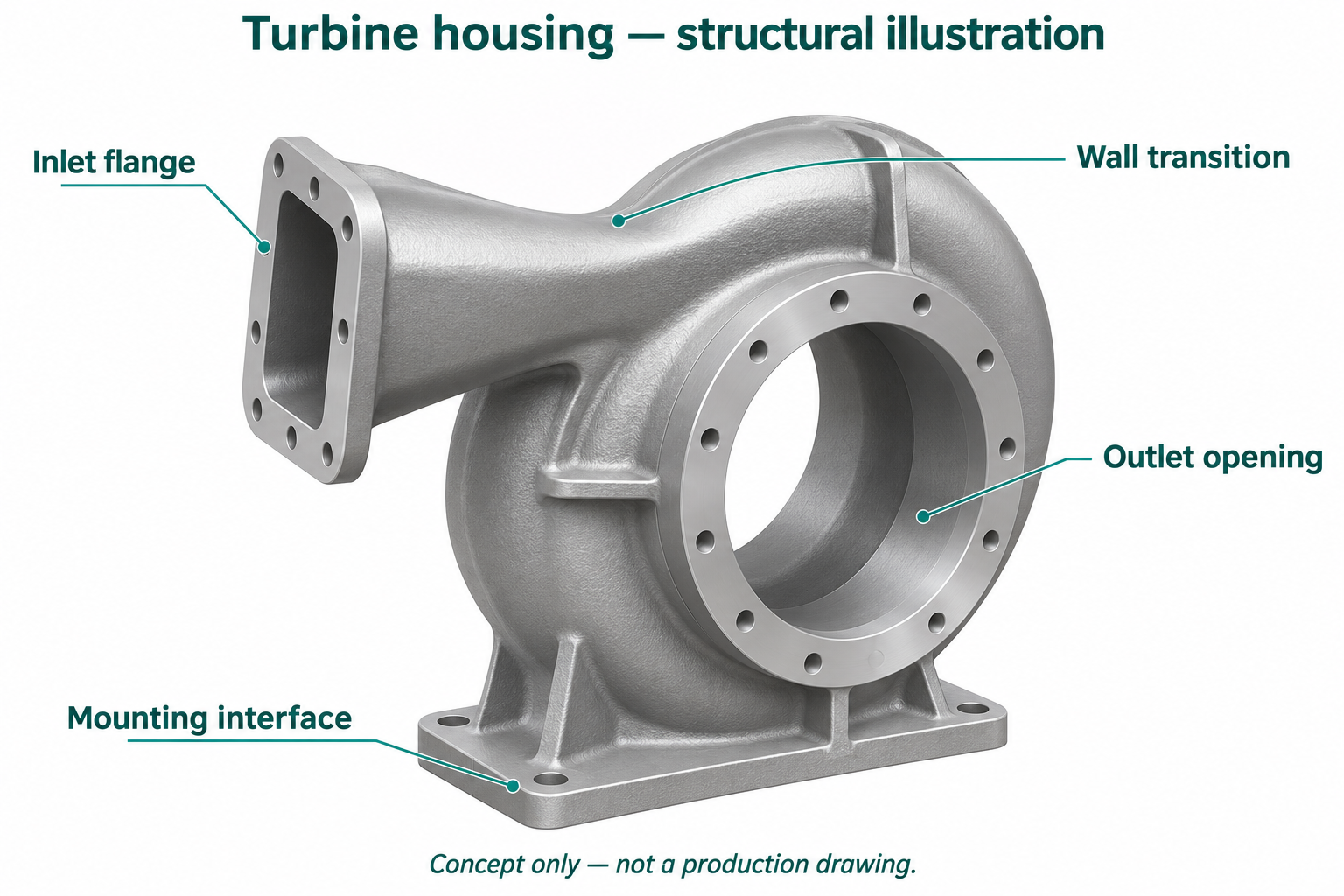
A turbocharger turbine housing guides exhaust gas toward the turbine wheel; it is distinct from the compressor housing on the air side. A stationary industrial turbine casing can have a different geometry, scale and qualification route again. A photograph labelled simply “turbine housing” does not establish which component is required. Include an assembly section, flow direction and interface drawing so the quotation covers the intended part.
This distinction also prevents a common purchasing error: applying a general corrosion-resistant casting specification to a component whose duty is dominated by heat. Do not infer suitability from a smooth surface, a familiar grade name or the appearance of an existing casting. The equipment designer should define the service requirements and approve the proposed material and manufacturing route.
Turn the operating cycle into usable design inputs
Provide the normal operating conditions, expected excursions, heating and cooling sequence, and relevant mechanical constraints. Record the gas environment as well as temperature. A single peak-temperature number leaves out how the housing is supported, how long it remains hot and how often it changes condition. Those omissions make two apparently similar requests difficult to compare.
The Nickel Institute’s guidance on heat-resistant castings identifies cyclic heating and component design as considerations in thermal-fatigue service. For this enquiry, that means supplying the duty information needed for an engineering review; it does not establish a universal safe temperature or prove that a particular stainless grade is adequate. The customer’s applicable design specification remains the acceptance basis.
Specify a cast grade and its delivered condition
“304,” “316” or “heat-resistant stainless” alone is not a complete turbine-housing material order. State the governing cast-alloy specification, grade, required condition and material records. If the existing drawing lists a wrought designation, ask the responsible engineer to approve the intended casting specification rather than treating the names as automatically interchangeable.
A proposed substitution should be reviewed against the actual duty and the required properties, including the effects of the delivered condition. Where the application calls for another alloy family or a different process, resolve that decision before tooling is approved. This article does not claim that Honyang Metal holds a particular turbine approval, supplies every heat-resistant alloy or guarantees a temperature rating.
Define the flow passage and assembly interfaces separately
A housing may combine an as-cast passage with machined flange faces, a locating bore and drilled or threaded mounting features. Mark each surface according to how it functions. The casting review should identify tooling access, any core or shell requirements, stock for machining and areas where abrupt section changes deserve attention. A machinable exterior does not demonstrate that an inaccessible passage meets the drawing.
| Drawing area | Information to establish | Acceptance evidence |
|---|---|---|
| Gas passage | Controlled profile, accessible inspection locations and permitted surface condition | Agreed profile or passage inspection record |
| Flange and mounting faces | Datums, flatness, hole position, machining stock and finish | Final dimensional report against the assembly datums |
| Locating bore or wheel interface | Required geometry and its relationship to adjoining features | Measurement method and sampling plan agreed before production |
| Material and critical sections | Cast grade, condition, traceability and any specified examination zones | Required material records and examination reports |
Agree inspection scope before comparing prices
Visual examination, dimensional inspection, material verification and nondestructive examination answer different questions. Name the method, coverage, acceptance criteria and reporting requirements for any specified examination. Avoid an undefined instruction such as “100% tested”: it does not say what is tested or what constitutes a pass.
If a leak or pressure test is required, define its purpose, medium, conditions and acceptance basis in the customer-approved plan. A room-temperature leak check does not by itself establish hot-service durability. Likewise, a material certificate does not replace verification of the housing’s finished interfaces. Keep these records separate so sample approval addresses each requirement explicitly.
Prepare an RFQ that exposes the manufacturing assumptions
Send the controlled model and drawing revision, assembly interfaces, approved material specification, service information, order quantity and expected repeat demand. Identify whether the request is for an unmachined casting, a finish-machined housing or another agreed delivery stage. Include required examination records, marking, packaging and delivery destination.
Ask for tooling, sample work, machining, examination and production quantities to be stated separately. Before approving samples, confirm that the reported part has completed every operation relevant to the final drawing. Record any concession against that specific revision; an accepted sample should not silently become permission to change the material, passage geometry or inspection scope on a repeat order.
Questions to resolve before tooling
Can an existing housing be copied from a photograph?
A photograph can help identify the component, but it cannot establish internal passage geometry, alloy condition or assembly tolerances. Provide an approved drawing or agree a documented reverse-engineering scope with the rights holder and responsible designer.
Does investment casting remove the need for machining?
The required interface determines the finishing route. Mark surfaces that may remain as cast separately from sealing, locating and fastening features that need a defined final condition. Confirm the proposed route against the drawing rather than assuming an entire housing can be delivered in one operation.
What should Honyang Metal receive first?
Begin with the housing drawing, service duty and material specification. Browse the site’s custom investment casting components for related component enquiries, then use Contact Us to submit the controlled requirements. Capability, alloy availability and qualification scope must be confirmed for the individual project.
Technical reference
Nickel Institute: Heat-Resistant Castings and Corrosion-Resistant Castings. General material-selection guidance; it is not a Honyang Metal product certification or a substitute for the customer’s design specification.

Custom Investment Casting Metal Parts
Follow Honyang Metal for practical updates on investment casting design, material selection, machining, inspection and international sourcing.investment casting, custom metal parts, China factory services, drawing support, supplier options and foundry exporter prices.