By Ms.Coco Ho
Compare aluminum housing routes through internal soundness, finished interfaces and the production program.
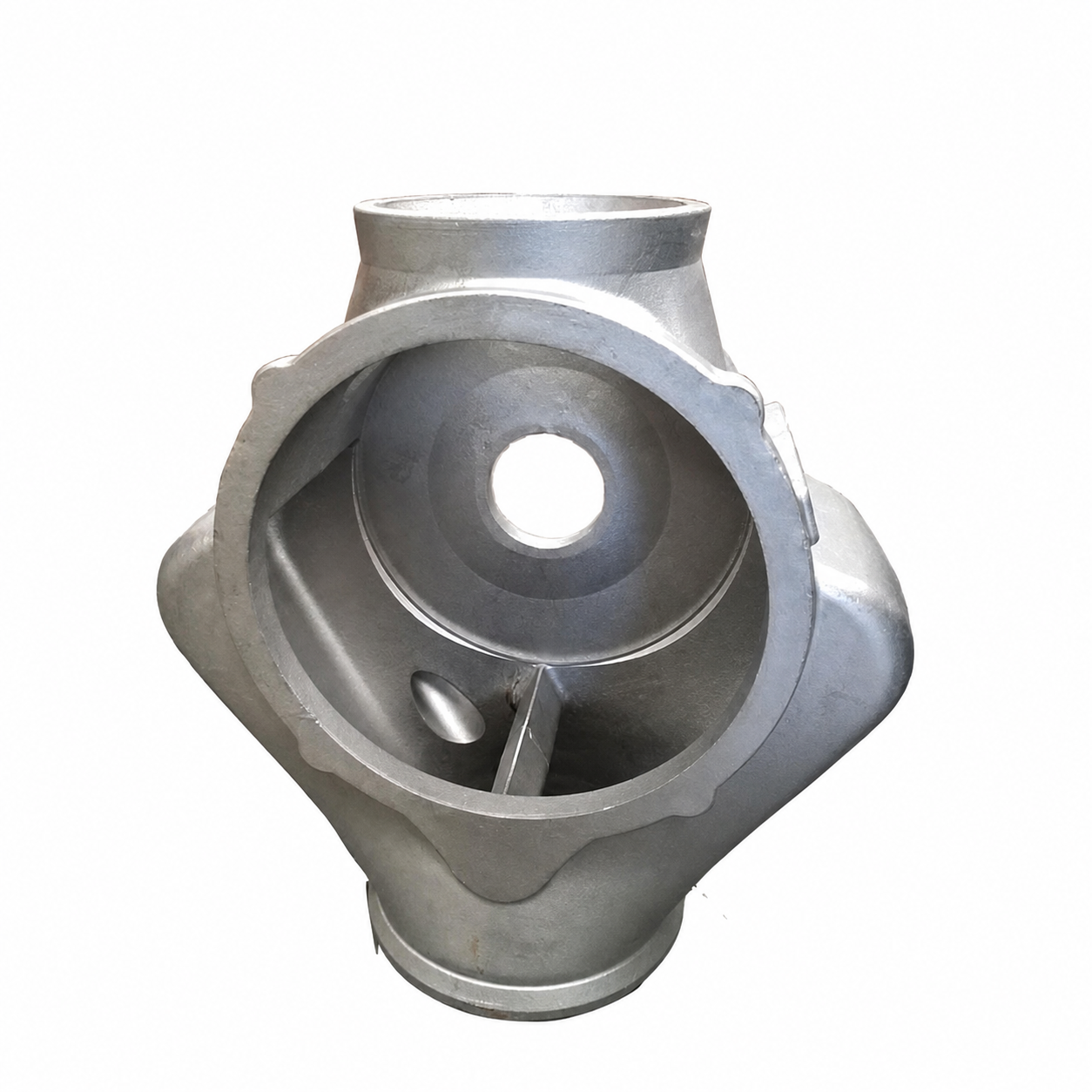
Sand casting vs die casting for aluminum housings is a useful design review when a housing combines a broad enclosure with precise mounting and sealing features. The comparison should follow the alloy, internal requirements and finished interfaces rather than assuming that either a low tooling price or a smooth exterior defines the best route. Here die casting means conventional high-pressure die casting.
Contents
Start with the housing duty
An enclosure that protects electrical components has different acceptance needs from a housing that retains fluid or supports a loaded shaft. Define the duty before comparing processes. The drawing should identify the approved alloy, delivery condition and the interfaces that control assembly, with any pressure or leakage requirement stated separately.
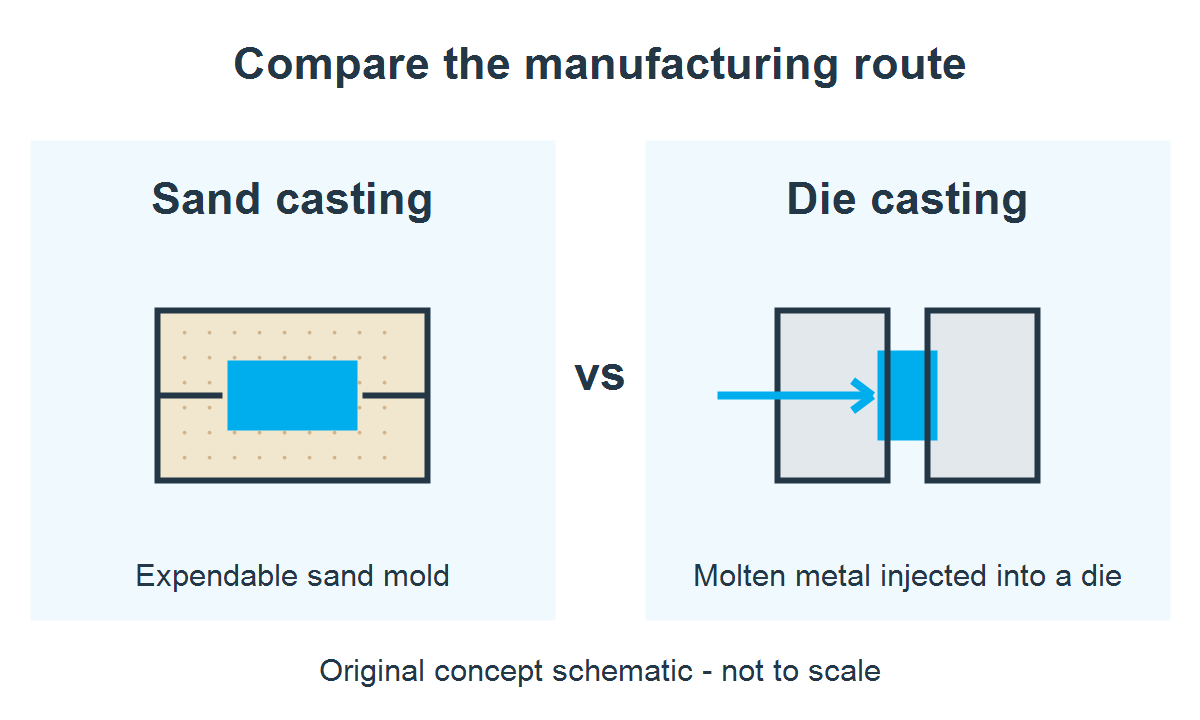
Sand casting pours metal into an expendable sand mold. High-pressure die casting fills reusable metal tooling under pressure. Those broad descriptions explain the forming routes, but they do not establish that two quoted housings have equivalent material properties, soundness or finishing. Request the detailed route proposed for the actual housing.
Review walls, bosses and internal access together
Housing geometry often mixes broad walls, mounting bosses and localized heavy regions. Review transitions and the relationship between these features rather than selecting a process from the thinnest wall alone. The supplier should identify where the proposed casting design changes the current drawing and how those changes affect function.
A sand core may create an internal cavity, while die tooling needs a workable arrangement of openings, slides or cores. A shape that is possible is not automatically economical or easy to inspect. For a housing with an internal shelf, ask how the tooling reaches it and how temporary material or release constraints are handled.
Set soundness requirements where they matter
Internal discontinuities can matter most where machining exposes a sealing surface or where a wall forms a pressure boundary. Do not infer acceptable internal quality from an attractive outer surface. Identify the relevant regions and agree the inspection or functional test required for the finished component.
If a supplier proposes a special filling or process-control variant, make that variant explicit in the quotation and qualification plan. A claim made for one controlled die-casting route should not be transferred to every conventional die casting. Likewise, a sand-cast proposal needs evidence appropriate to its actual process and geometry.
| Review item | Decision evidence |
|---|---|
| Function | Enclosure, loaded support or pressure boundary |
| Cavities | Core or die access and verification |
| Interfaces | Common final machining and inspection scope |
| Program | Separate tooling, revisions and repeat accepted parts |
Compare finished interfaces in one coordinate system
Mounting faces, bearing seats and cover interfaces may require machining. Define their datums and the relationships that matter after all specified treatments. A near-net housing can still demand several setups if its important features face different directions or lack suitable locating surfaces.
Ask both suppliers to price the same finished state. Include threaded holes, deburring, cleaning and the agreed inspection records. If one proposes machining from a different datum, review how that choice controls the relationship between the cover face and the internal features rather than comparing the number of operations alone.
Separate launch expenditure from repeat supply
Sand tooling and die tooling expose a project to different initial commitments and revision work. Their economics depend on the actual mold concept, part geometry and order program. Obtain part-specific quotations for tooling, sample approval and recurring accepted components rather than using a universal production-volume crossover.
A housing still undergoing packaging changes may need a different launch strategy from a stable design with repeat demand. Discuss the cost and timing of moving a mounting boss or changing a connector opening. Include tool maintenance and responsibility for future revisions where those affect the supply program.
Approve the route before approving the price
Use a comparison sheet that holds material, drawing revision, finished interfaces, inspection and delivery condition constant. List any proposed deviations separately. This makes a low quote easier to evaluate because the source of the saving is visible rather than hidden in a changed scope.
Choose sand casting or high-pressure die casting on the evidence for the particular housing. A successful route is one that can repeat the approved material, geometry and final acceptance condition at the required supply cadence, with the relevant manufacturing assumptions documented.
For a component-specific discussion, review the product and manufacturing overview and use the contact page with the current drawing and required delivery condition.

Custom Investment Casting Metal Parts
Follow Honyang Metal for practical updates on investment casting design, material selection, machining, inspection and international sourcing.investment casting, custom metal parts, China factory services, drawing support, supplier options and foundry exporter prices.