By Ms.Coco Ho
Shell molding is a sand-molding route; compare its tooling and cores without confusing it with ceramic investment shells.
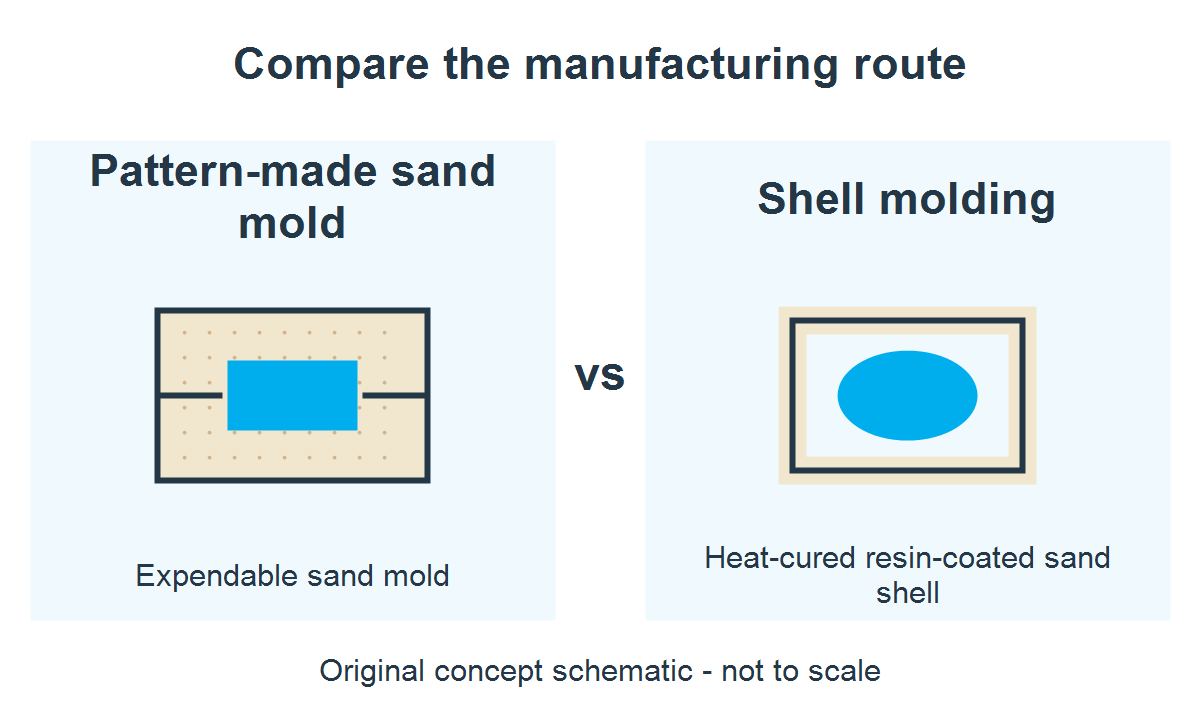
Sand casting vs shell molding can be a misleading phrase because shell molding itself uses sand. A more useful comparison sets conventional sand-mold production alongside the resin-coated sand shell process and asks how each creates the mold, handles cores and controls important features. This distinction prevents the word shell from being confused with the ceramic shell used in investment casting.
Contents
Define the two mold constructions
Conventional sand casting covers several mold systems, so identify whether the baseline uses green sand, a chemically bonded mold or another specified route. Sand shell molding uses a heat-cured resin-coated sand system to form mold sections. It remains different from the refractory shell built around an expendable investment-casting pattern.
A quotation that only says shell does not define the process well enough. Ask what the mold is made from, how it is produced and how the casting is recovered. Clear terminology helps the designer judge which proposed advantages actually apply to the process being purchased.
Look at the pattern and parting arrangement
The pattern concept influences mold production, release and the location of parting features. Compare those details against the component rather than assuming that a named molding process removes the need for draft or a practical split. A supplier should show how the proposed pattern produces the required casting geometry.
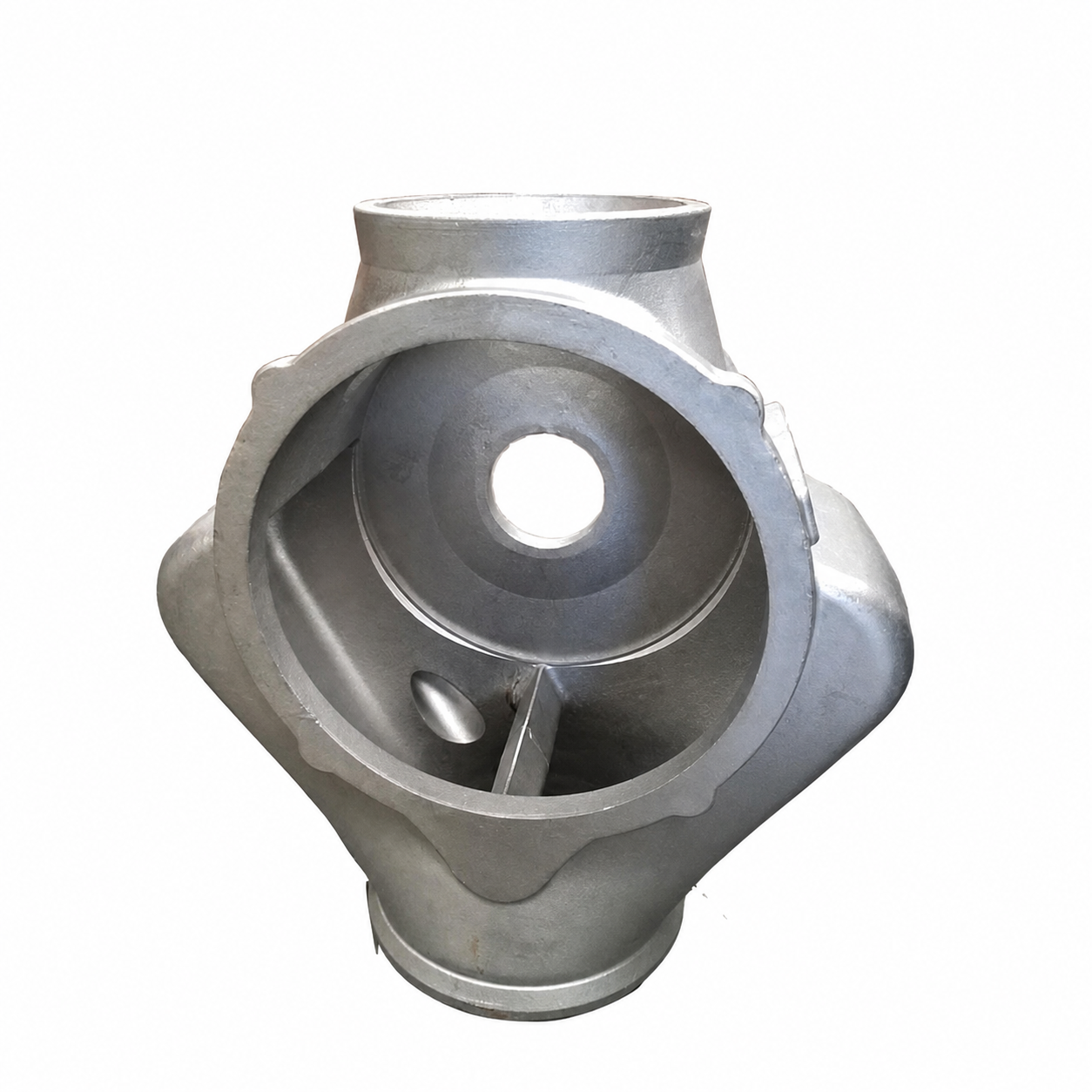
For an illustrative small pump body, mark the flange, cavity opening and connecting neck. Review where mold sections meet and how the parting region relates to the flange that will be machined. A process change can move a cleanup task or alter a machining allowance, so keep the downstream work visible.
Treat cores as a separate engineering choice
Shell cores can be used in a wider casting route; the presence of a shell core does not mean the complete mold is shell molded. Ask the supplier to distinguish the mold process from the core process and to describe how the core is located, supported and removed.
The important issue is the passage or cavity that the core leaves behind. Specify the geometry and acceptance requirement, then review how core location and assembly are controlled. For a passage near a machined bore, include the minimum wall or other governing relationship in the inspection discussion rather than checking the bore alone.
| Review item | Decision evidence |
|---|---|
| Names | Sand shell molding is not ceramic investment shelling |
| Tooling | Pattern split, release and important parting regions |
| Cores | Specify core production independently of mold production |
| Acceptance | Final surface, cavity and machining relationships |
Compare the final surface, not an isolated mold claim
Mold surface reproduction is relevant, but the finished casting also experiences pouring, cooling, shakeout, gate removal and cleaning. State which surfaces remain as cast and which are machined or treated. Do not substitute a general process finish description for an agreed acceptance standard.
Where a surface is functional, define a suitable measurement or visual acceptance method and the stage at which it is applied. A sample can demonstrate the proposed route, but the approved condition must be reproducible on later lots. Keep any local repair or cleanup provisions explicit rather than leaving them to informal interpretation.
Ask what changes between first and repeat orders
Pattern preparation, core tooling and production equipment affect the initial commitment and repeat workflow. Compare part-specific quotations and proposed batch arrangements. A nominally faster mold process may offer little benefit if a different operation controls the finished-part schedule.
If design revisions are likely, ask which tooling elements would change and how the current tools would be identified afterward. Include the time to approve revised samples. This prevents a small pattern revision from being treated as an administrative change when it actually alters a critical casting feature.
Write a process description into the order
The purchase package should identify the approved mold route, core arrangement where important, drawing revision, material and finished inspection scope. This gives future orders a traceable reference without trying to specify every foundry operating parameter.
Choose the mold system that supports the component and production program with convincing sample and process evidence. The decision is not whether sand is better than shell in the abstract; it is whether a specific mold-and-core arrangement can repeat the finished requirements economically.
For a component-specific discussion, review the product and manufacturing overview and use the contact page with the current drawing and required delivery condition.

Custom Investment Casting Metal Parts
Follow Honyang Metal for practical updates on investment casting design, material selection, machining, inspection and international sourcing.investment casting, custom metal parts, China factory services, drawing support, supplier options and foundry exporter prices.